

Mock Tests - Very Important
DVSA recommends undertaking a number of Mock Tests prior to your actual test.
I consider these so important they are a mandatory requirement for me to use my car to take you to a test.
What is a Mock Test?
Conducted within a normal lesson they are where we mimic the actual DVSA Test as closely as possible to allow the Student to experience as best we can the actual test day conditions.
How is this done?
Normally I will role play the role of a DVSA examiner on the day. as much detail is placed into the Mock Test as can be in a controlled way, the purpose is to replicate the actual test conditions in as close a detail as possible for the Student.
How Does This Help?
The Student will experience likely for the first time, how an examiner will conduct a test and more importantly how they score the test.
This increases the chances of actual success as it helps to:
- 1) Identify any further gaps where additional training may still be required.
- 2) It reduces nerves in the Students as they are more familiar with the process before the actual test.
- 3) The Student can work through a more detailed report of any mistakes/issues within a lesson, with the trainer to develop any gaps or issues still lurking.
- 4) Although conducted in a paid lesson slot, it reduces car hire fees and test fees if the Student was not ready for Test.
- 5) Gives each Student the confidence to know they have been through a test process albeit a Mock and hopefully allows them to feel better about the process.
How Many Mock Tests are conducted?
We can complete as many as required usually determined through discussion with the Student. At least one successful Mock Test is required to go to test with my car.
If I failed my Test is a New Mock Test required before we go to Test again in Your car?
Yes is the simple answer, they are a great way of evaluating Test readiness. Passing of a Mock Test does not guarantee you will pass a Test by any means. However it shows you can drive at a Test Standard and are capable of passing at a point in the future.
When do we need to complete a Mock Test by?
We normally conduct them towards the end of the training program. Usually determined in discussion with the Student. They should be scheduled for at least 12-15 working days before your test date as a minimum. That allows a small amount of Time to reschedule your Test date should we need to (DVLA 10 working day period is applicable).
How do we book a Mock Test?
Book a standard lesson within the App as per normal, in our discussion in car, I can mark that lesson as a Mock Test so we can all see on the diary when your Mock Tests are scheduled.
How Does the Mock Test work?
We would complete approximately an Hour of normal training session (same as Test day, getting you “Warmed up”). We will then come to a convenient place to stop safely.
We will run through the Scoring Criteria so we are both clear on what is expected. I will start the Mock Test and you will drive for approximately 40 minutes (Same as a Test) under Mock Test conditions.
At the end of the Mock Test, I normally ask you to comment on how you felt it had gone and in a very transparent way share my findings and we can discuss all elements of the drive.
You will have the result in car (same as Test) within minutes of stopping the Mock Test. By doing this time permitted, we always review any weak elements of your drive, return to certain areas and situations to reflect and review together.
What Criteria is used for the Mock Tests?
It is the same criteria as used for DVSA Tests. although I tend to use my notes so I can maintain a safe observation in car. Examiners will typically use an electronic Pad on Test.
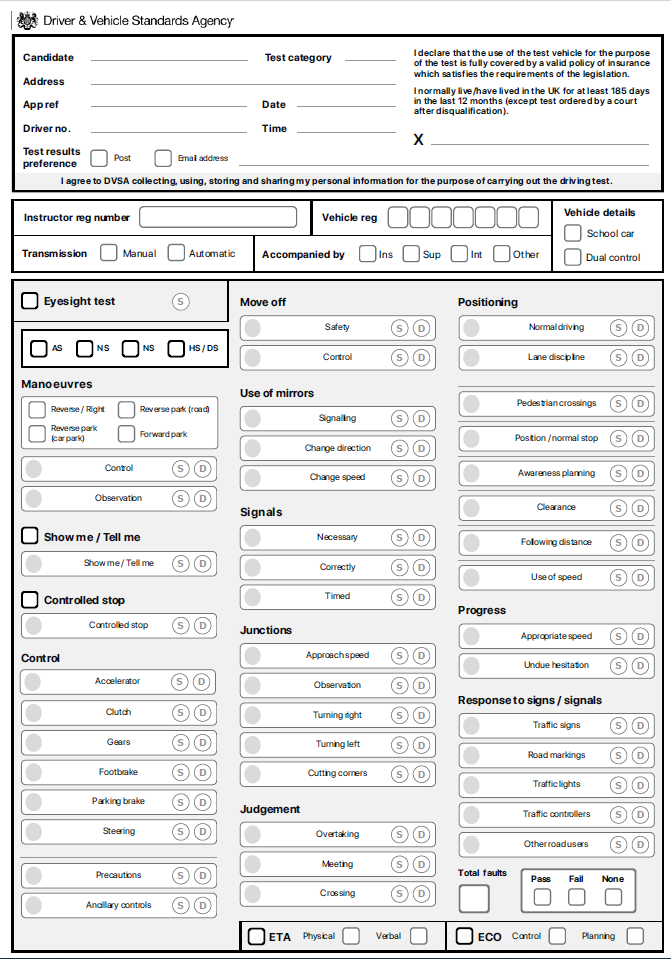
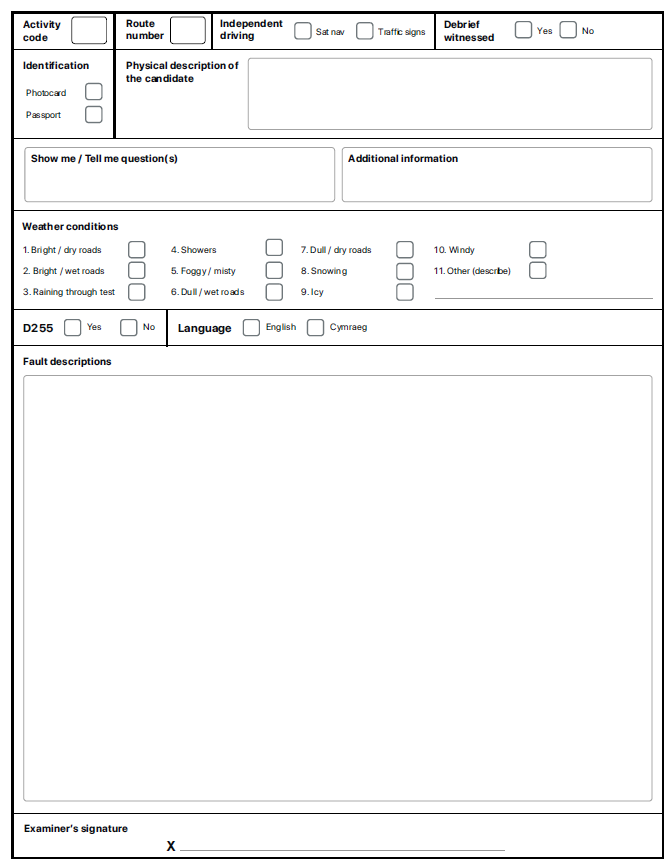
DVSA – DL 25 Test Report
This is the base line form outlining all the criteria used for DVSA Driving Tests.
Side 1 highlights key areas that are assessed as you conduct your Driving Test or in this case the Mock Test.
The Criteria are applied through the 40 minute test window and each examiner will record what they see as you undertake the test. at the end of the test they will collate the results and give you their determination.
Important – Remember you are Test until the examiner states test over, most mistakes are made near the end of the tests when the Students relax to much.
I always recommend Verbalise any issue you feel appropriate on test. the examiners will see how you are driving and responding to road conditions and score accordingly. It is very much harder for them to evaluate your reactions and actions in say a dynamic situation. Your intention may not play out quite as you had expected and they will only record what they witnessed which may affect the result.
Test Outcomes
Minor driving faults – are typically small faults that were not correct at the time of Test, but did not affect any other road user or were safety related.
You are allowed a maximum of 15 minor faults within a test but no more than 3 in the same area. In this case it would be deemed that their is an issue likely to become serious and a Serious fault would be awarded.
A Serious Fault – You are not allowed to record any serious faults on your test. if you do it will be classed as a fail.
A serious fault – is something potentially dangerous.
A Dangerous Fault – You are not allowed to record any Dangerous faults on your test. if you do it will be classed as a fail.
A Dangerous fault – involves actual danger to you, the examiner, the public or property.
Examiner Took Action (ETA) – If your examiner has to take action either physical or verbal within your test, it is unlikely you will pass.
Important – If you feel you have made a mistake, try to put it to the back of your mind, forget about it, its done for now. You may still be able to recover the test and you may not have actually made a mistake.
So many tests are failed to mistakes being made after the initial fault wrongly predicted by the Student.
Always drive the tests (Mock or real) to the very best of your ability, keeping calm, Safe and Legal and you are likely to pass.